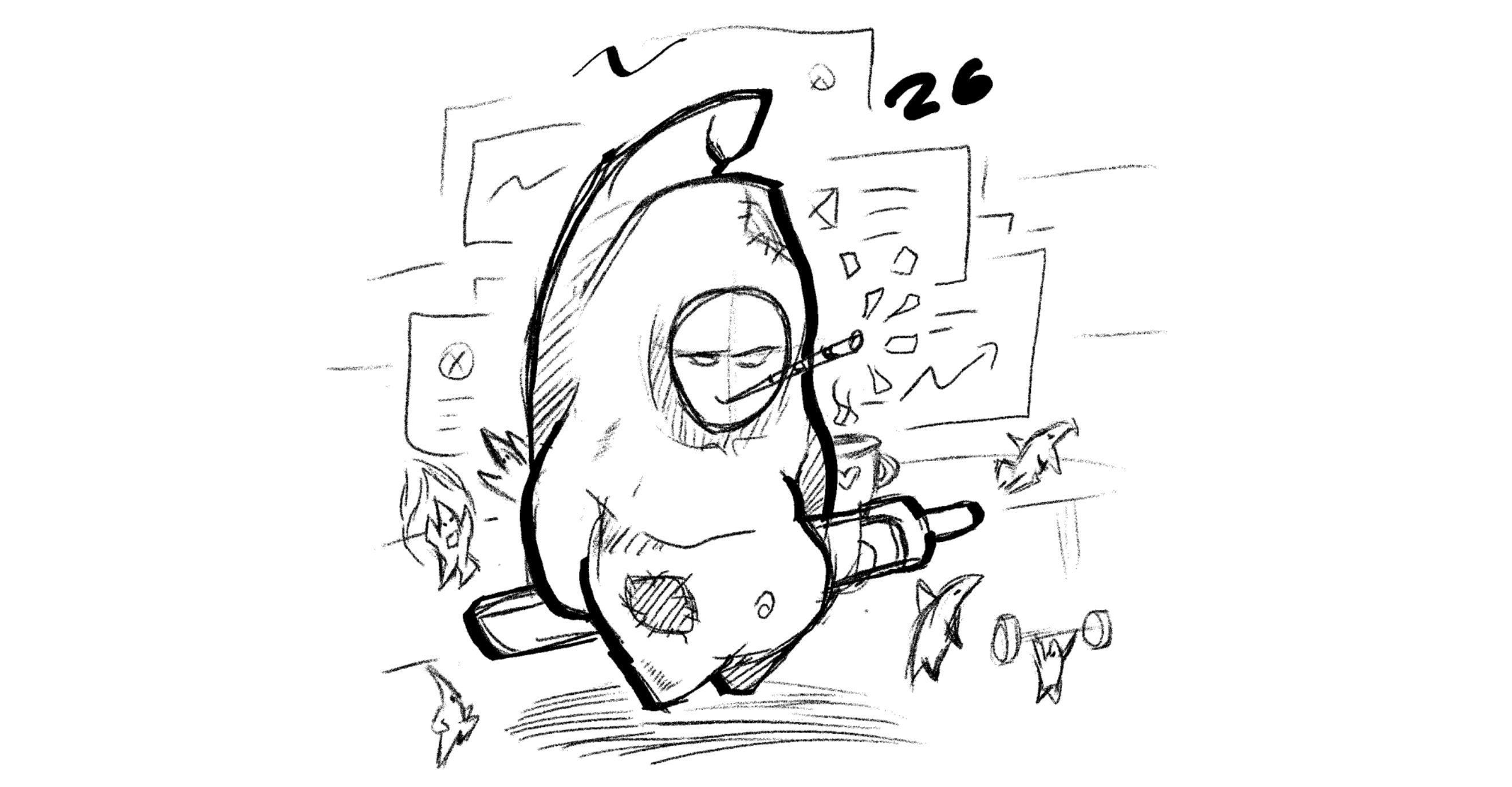








As a creative and entrepreneur, I have learned the hard way how easily I get distracted. Everything suddenly feels more exciting than the actual task in front of me. In this article, I share my experiences and a few of the focus techniques that help me stay on track.
Why does your brain resist focus?
Mentally, your biggest opponent is yourself. Your brain constantly tries to trick you and uses every shortcut it can find to get a quick, short-lived reward. Your long-term goals barely register. Why is that? It goes back to our evolutionary roots. In the Stone Age, our brains did not have the luxury of thinking long term: you were either hunting or being hunted, which left very little room for long-range planning.
Remember your last diet plan? How often did you give in to short-term treats and lose sight of your long-term goal? Do not worry, we all do it. ;)
In the book Switch, this is described through the Rider and Elephant metaphor. The Rider stands for logic and the Elephant stands for emotion. Only when both move in the same direction can you pursue your long-term goals without getting pulled off course by short-term impulses. Whatever you set out to do, tune both your emotional and your logical side to the goal.
Your emotional side responds to images and feelings, while your logical side needs clear facts. Whether you want to stick to a diet or move forward in your career, if the goal does not speak to both, you will keep giving in to short-term cravings.
A paraphrased quote that often helps me is this:
"Once the samurai has strayed from his path, there is no turning back."
– Bernhard Moestl, Shaolin: Du musst nicht kämpfen, um zu siegen
It really is that simple: once you give in, you have left your original path. To keep from getting lost completely, course-correct as quickly as you can.
What practical habits keep you focused?
Now that we know what pulls us away from our work, we can actively counter it and make life a little harder for that comfortable, fuzzy elephant.
1. Change your workspace regularly
I notice a clear pattern in myself: if I sit at the same desk too often or for too long, it becomes, quite literally, just a "workplace". That sounds harmless, but the honest truth is that my brain simply does not like work. Changing locations helps me pick up momentum again and stay motivated. Usually it goes like this: I sit down at my desk, check my emails, and realize I have zero desire to tackle the real task. So I get up, walk around for a bit, and take my laptop to a spot I enjoy to get some work done there, and when the weather is nice, gladly outside.
In short: switch your workspace often so your brain does not start associating one spot with drudgery or pressure. Make working as pleasant as you can. Small rewards like a good cup of coffee or tea can work wonders too.
2. The foot-in-the-door principle
You know that moment when you start something tiny and suddenly cannot stop? That is the whole trick here. If you need to clean your apartment or house, do not set out to clean the whole place. Start with a single room. Once you are in motion and see the first result, the rest feels much easier because you have already started. ;)
If you want to read more on this, take a look at Switch: How to Change Things When Change Is Hard by Chip and Dan Heath. It is packed with practical examples for driving change for yourself or in your company.
3. The Pomodoro technique
We are not talking about tomato soup from your favorite Italian place, but a focus method developed by Francesco Cirillo. It starts from a simple premise: focus is a limited mental resource, so it runs out. After some experimenting, Francesco noticed that a natural focus span lasts around 25 minutes, named after his tomato-shaped kitchen timer. Because your focus is finite and your brain needs to refuel just like a car, every 25-minute sprint is followed by a 5-minute break. Use that break for all the small, repetitive tasks that get in your way: replying to chat messages or checking your Instagram, X/Twitter, or Facebook feed. Once the 5 minutes are up, jump straight into the next round and repeat the cycle as often as you need.
How a Pomodoro session works
- Write a to-do list with the tasks you want to focus on.
- Cut external distractions down to zero (more tips on that below).
- Set a 25-minute timer on your phone, a kitchen timer, or your computer to make the commitment tangible.
- Work on your tasks with full focus for 25 minutes, without interruptions.
- Take a 5-minute break to relax and check your social channels if you like. That is all it takes: no expensive gear and no heavy planning. Once you have found your groove, you can extend your focus blocks, just do not push them too far or your brain will shut down and lose interest. When in doubt, stick to 25 minutes and mute the alarm if you are in flow.
4. Make a plan and block your calendar
It sounds almost too basic, but your brain needs a cue to prepare for focused work. A proven habit for both workouts and deep work is blocking fixed slots in your calendar. Check the evening before or first thing in the morning what you want to get done today, and block that time in your calendar right away, whether for client work or personal projects. Just having that calendar entry helps you tune in to what is ahead.
5. The 5-second rule
Cue the slogan: "Just do it!" It sounds almost too simple to be true, but think about how much time and energy you burn just overthinking a task. Wouldn't it be better to put that time straight into the work itself?
Whenever you catch your thoughts bouncing back and forth again, take a breath, count to five, and make a call: do it or drop it. You can thank me for the saved time later.
6. Cut distractions on your computer and phone
Endless notifications and stimuli hit us every second, and the internet does not make it any easier. Here is a quick look at my personal avoidance strategies:
Focus Assist and Do Not Disturb
Microsoft, Apple, and Google know that we get buried under a constant stream of notifications. Every modern operating system includes a built-in function to silence unnecessary interruptions:
- Windows = Focus Assist / Quiet Hours
- macOS = Do Not Disturb
Turn it on and reminders, emails, and social media leave you alone so you can concentrate on your work.
Virtual desktops
One of my secret favorites. I usually keep my email and calendar apps on one virtual desktop, my actual work tools on a second one, and chat and social media on a third. During focus blocks, I stay on my work desktop and concentrate on the task in front of me.
7. Keep your balance and stay consistent
This is the tricky part: always keep a balance between enjoyment and effort. Especially on personal projects, pushing yourself too hard can backfire quickly. Take the time you need and stay consistent.
Two bonus tips from peonkun.de
Shift your work hours when nothing moves
Listen to your inner rhythm and find the time of day that works best for you. Use those hours for the tasks that genuinely move you forward, not for the latest notifications or an endless email inbox. Sort your tasks clearly and push routine chores into the hours when you would not get demanding work done anyway.
Keep a reward in mind for afterwards
When you have a tough day or a packed week ahead, pick a reward for afterwards that genuinely motivates you. That can be reaching a milestone itself, or something tangible like a new game, a trip to a climbing park, a good book, or a short getaway. Listen to yourself and see what motivates you.
Wrapping up
I hope you found a few useful ideas in this article. Share your own experiences in the comments, maybe you have other habits that could help fellow readers too.